TL;DR
Vivere needed a scroll-stopping campaign for their hammock. We built a camera rig that didn’t exist, swung one hammock through six worlds in what feels like a single motion, and turned it into a full campaign of spots, stills and cutdowns.
One hammock. Six worlds. A camera that swings through all of them in what feels like a single motion. This is the story behind Vivere’s “This Is How I Relax”: a 30-second spot built around a camera rig that didn’t exist until this project needed it to.
The Ask
Create a brand campaign for Vivere’s most popular product: their hammock. Fun, catchy, and eye-catching enough to stop the scroll on social and on marketplaces like Amazon.
The Concept
Vivere wanted a full campaign. One hero video, plus stills and cutdowns they could run across every channel. We pitched a range of directions, from natural day-in-the-life to hyper-stylized studio work. The one that stuck was called “Sway.”
The idea came from the product itself. A hammock sways back and forth through an arc, and we wanted the camera to do exactly the same thing: swing 180° over the hammock like a pendulum, with the world below changing every time it passes over the top. A backyard becomes a beach, becomes a living room, a campsite, a basement. The camera move is the hammock’s sway, scaled up.
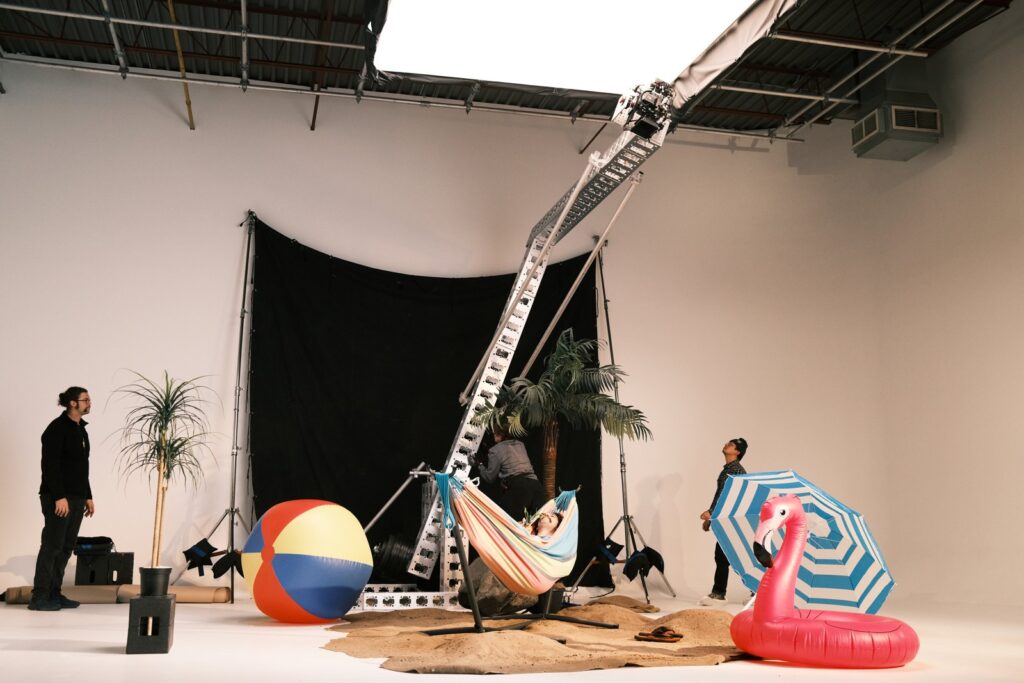
After a lot of research, we couldn’t find a rig anywhere that could pull off the move the concept needed. So the team built one from scratch. A counterweighted arc that swings the camera through a perfect 180° and resets precisely, take after take. On set, it went by the rainbow rig.
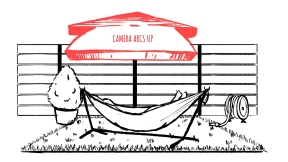
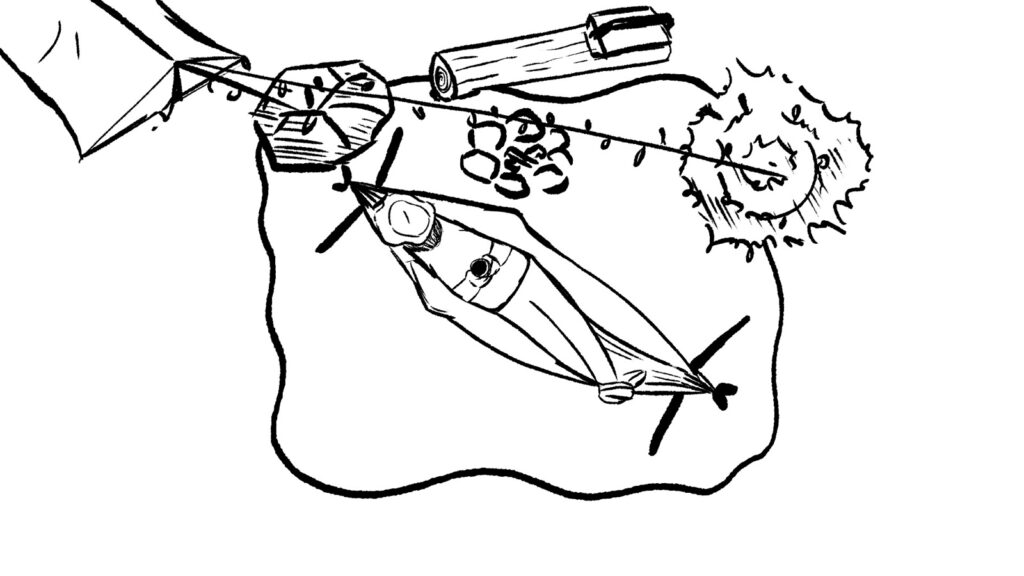
Every beat boarded first, including the overhead frame at the top of each arc.
Pre-Production
We had two shoot days, so preparation carried the project. Exact storyboards, set mock-ups, props labelled ahead of time, rehearsals wherever we could squeeze them in.
The sets were deliberately minimal and hyper-stylized. Bright colours, and just enough dressing that you instantly know where you are. That was partly for the look and partly for control. Shooting in-studio in early winter meant no weather, no shifting sunlight, and a rig we could reset precisely between takes.
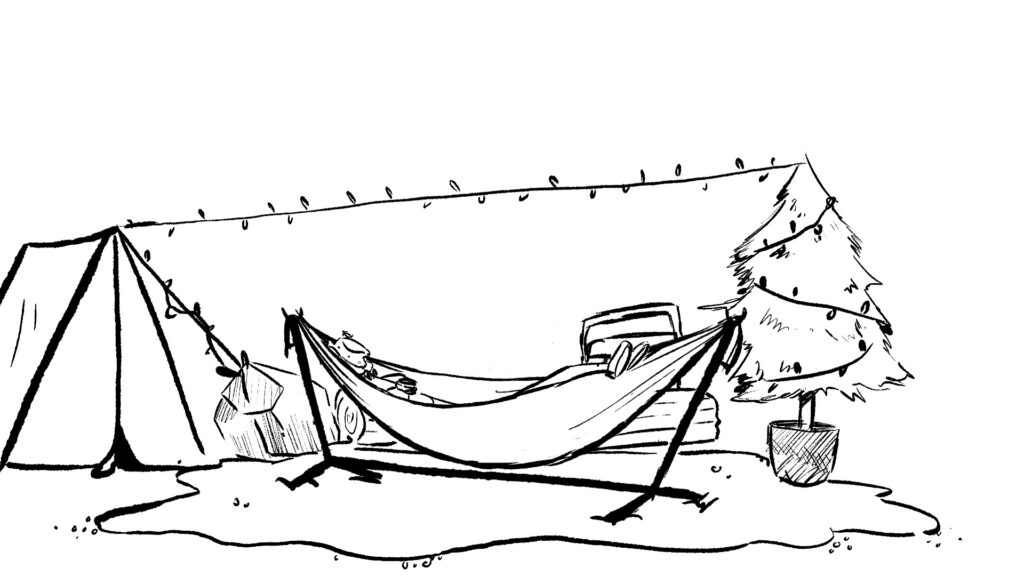
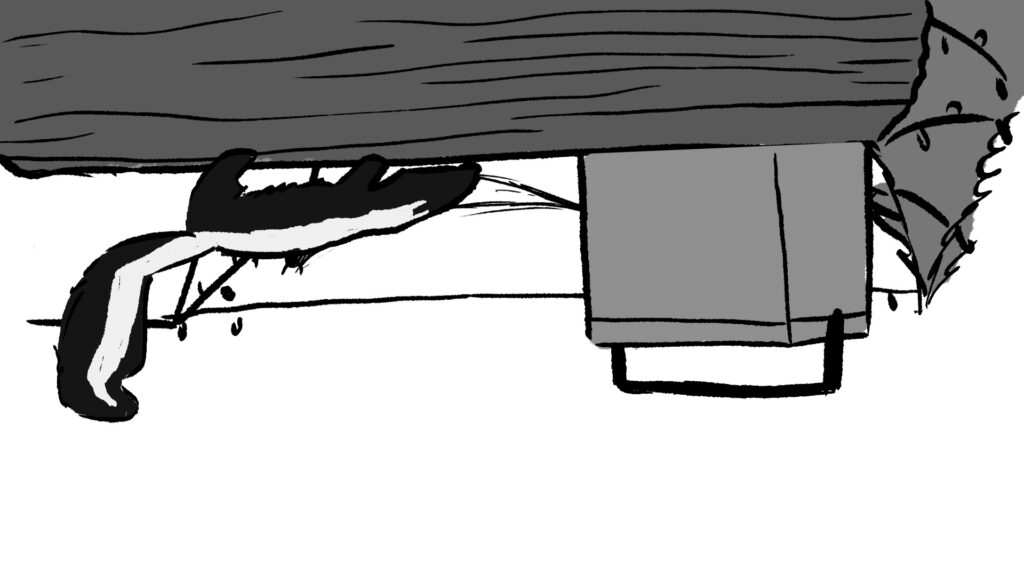
Yes, the skunk was always in the script.
Prop sourcing, the unglamorous version
The backyard grass came off Facebook Marketplace. The campsite cooler is a vintage 1980s Coleman found on Etsy. The camping mug is an old Arc-branded one whose logo peeled off years ago.
The Cut-Point Problem
The rig created a puzzle we didn’t fully see until testing. To jump from one world to the next mid-swing, the lens needs to be completely blocked for a split second. A natural wipe. So we designed the sets around those moments. Every vignette has a foreground element with a secret job: a kid running into frame, a playhouse the camera arcs behind, an umbrella, a fence. They read as set dressing. They’re actually edit points, each one a precise height and width, close enough to the lens to fill the frame as the camera whips past.
The Rig
This is the part everyone on set was filming on their phones.
The finished rig swings the camera through a full 180° arc over the hammock. Our DP spent the pre-light day up a ladder with the rig team, measuring the exact camera height at the top and both ends of the arc so the hammock stayed perfectly framed through the entire move. The night before the shoot, the crew was still fine-tuning the counterweights until the swing was silky smooth.
The rig sees everything. By the end of the move the camera is looking at whatever was behind it at the start, so there was nowhere to hide a single light. Everything had to come from above or the sides, playing onto infinity-white walls that wrapped both ends of the studio, while we managed the shadow of the camera itself as it swept through.
And then there’s the swivel. The basement scene called for a reveal: one character on a laptop and a second character gaming, back-to-back in the same hammock. For his line to land right-side up, the camera had to roll 180° on its own axis at the top of the arc, mid-swing. We tested digital versions and masked cuts, and threw them all out. The final move is done for real, in camera.
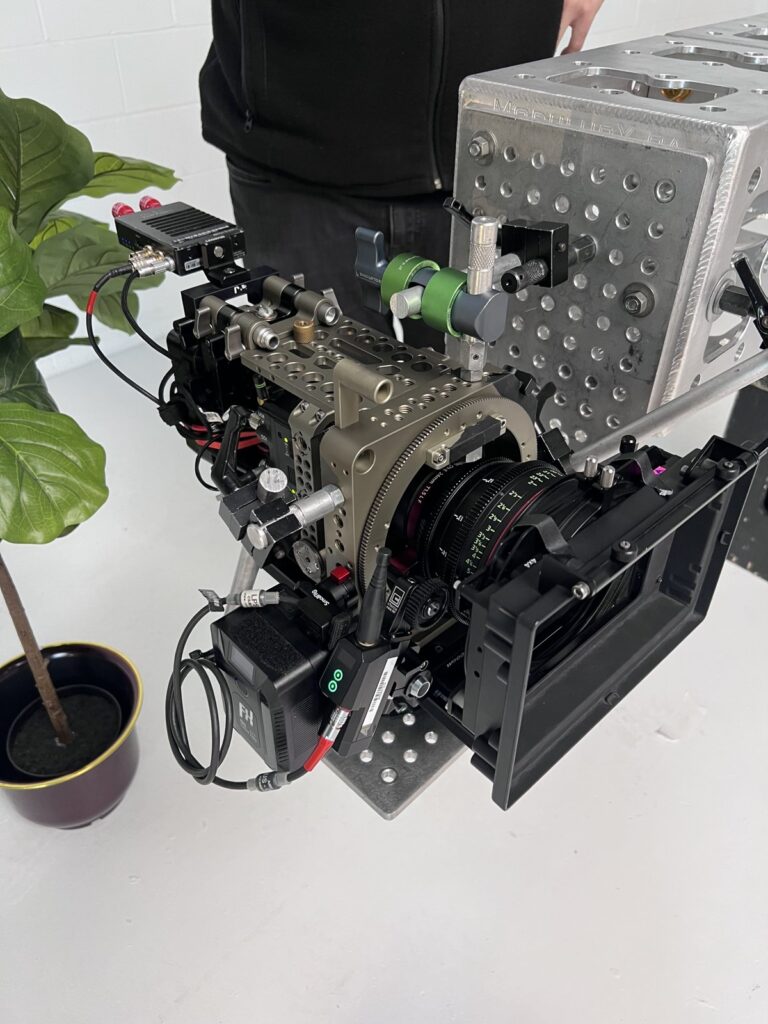
Production
We shot for two days, one scene on day one and four on day two. Finding the space was its own Goldilocks problem: wide enough that the rig could swing freely, small enough that the camera never saw past the white. Summit Studio was exactly right.
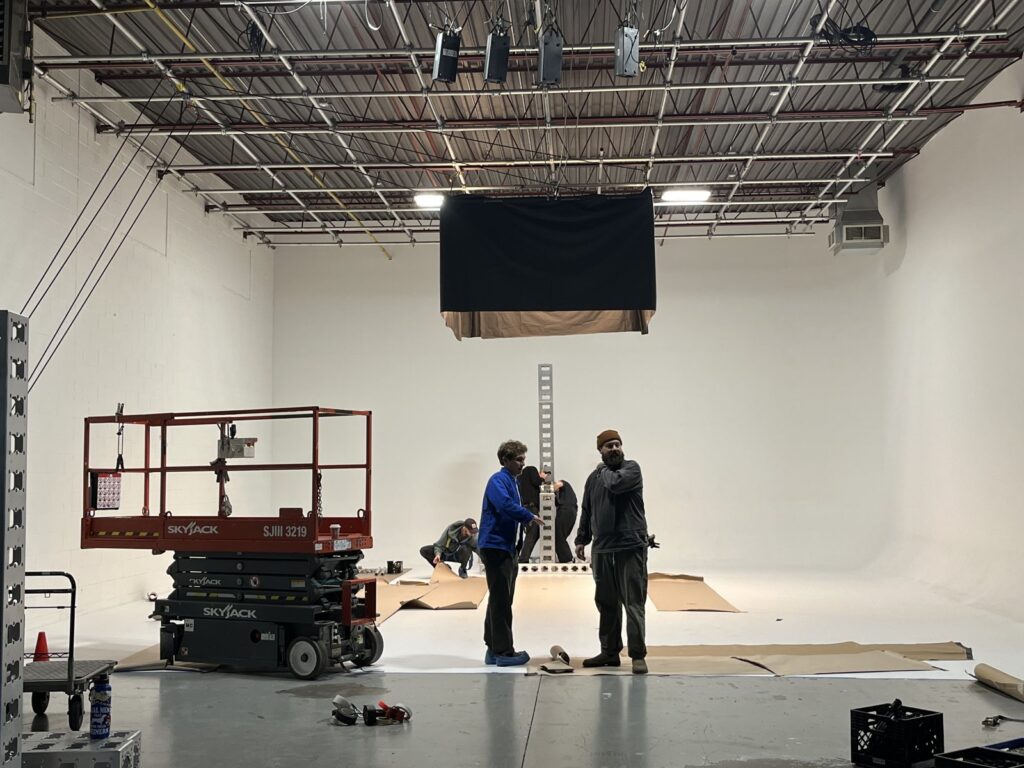
Directing for the rig meant choreographing everything to the swing: lines timed to land exactly at the top of the arc, performances that read at three different camera heights, and blocking designed so the hammock stays the hero of every frame. Hands behind heads, a leg draped over the side. Relaxed to the viewer, deliberate to us.
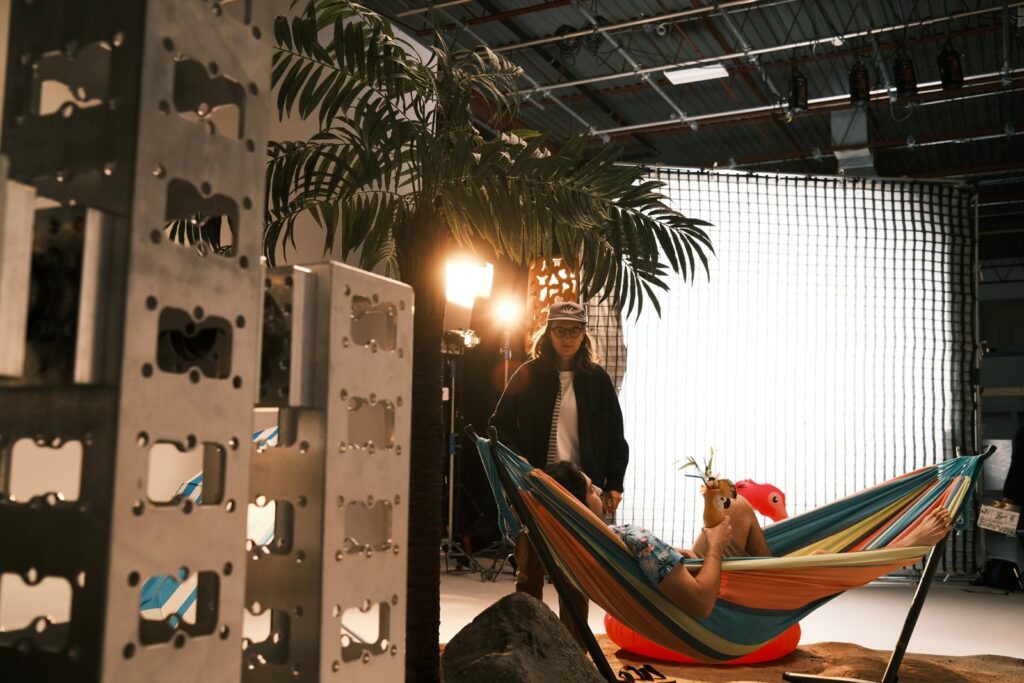
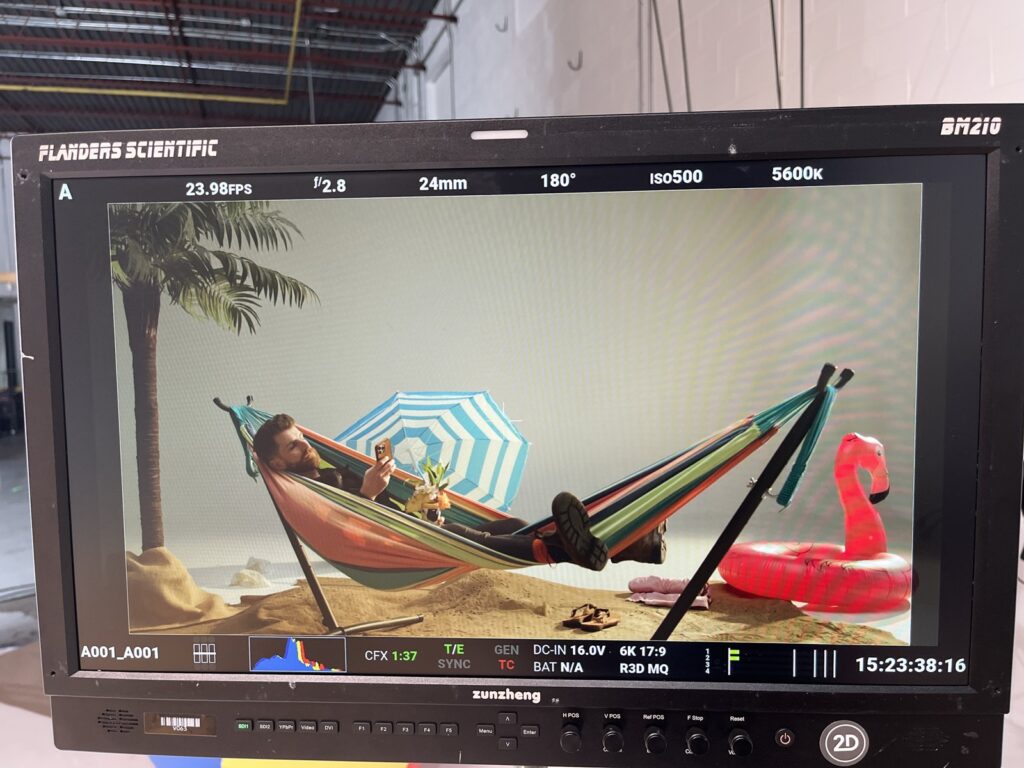
On set, and what the camera saw.
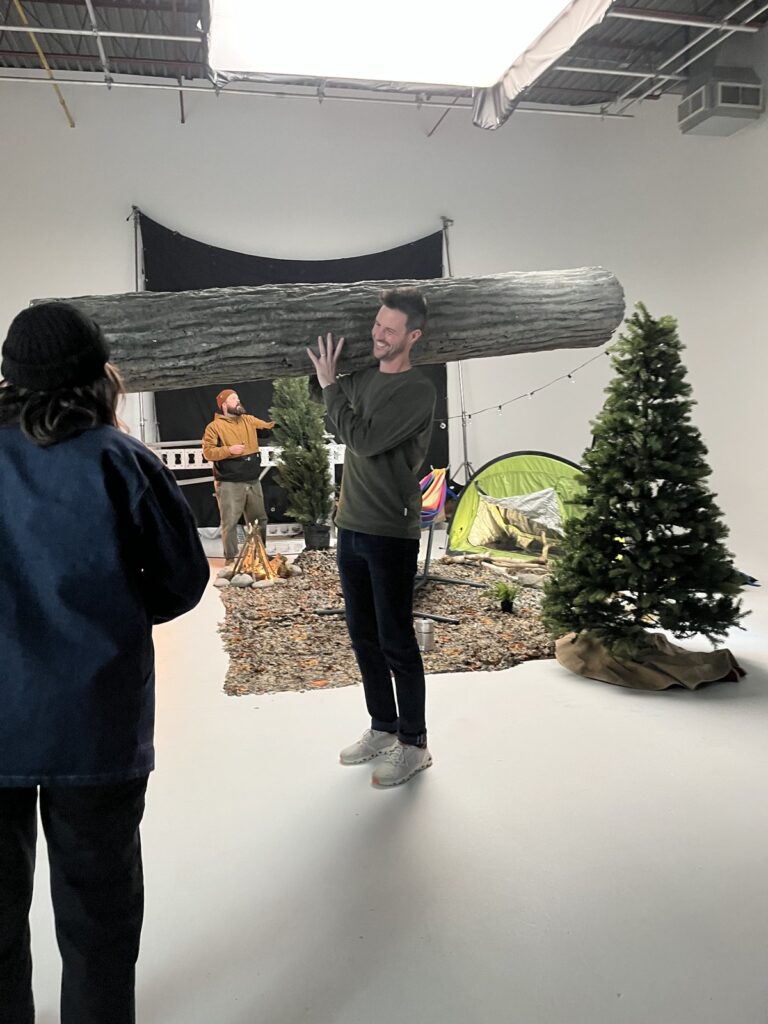
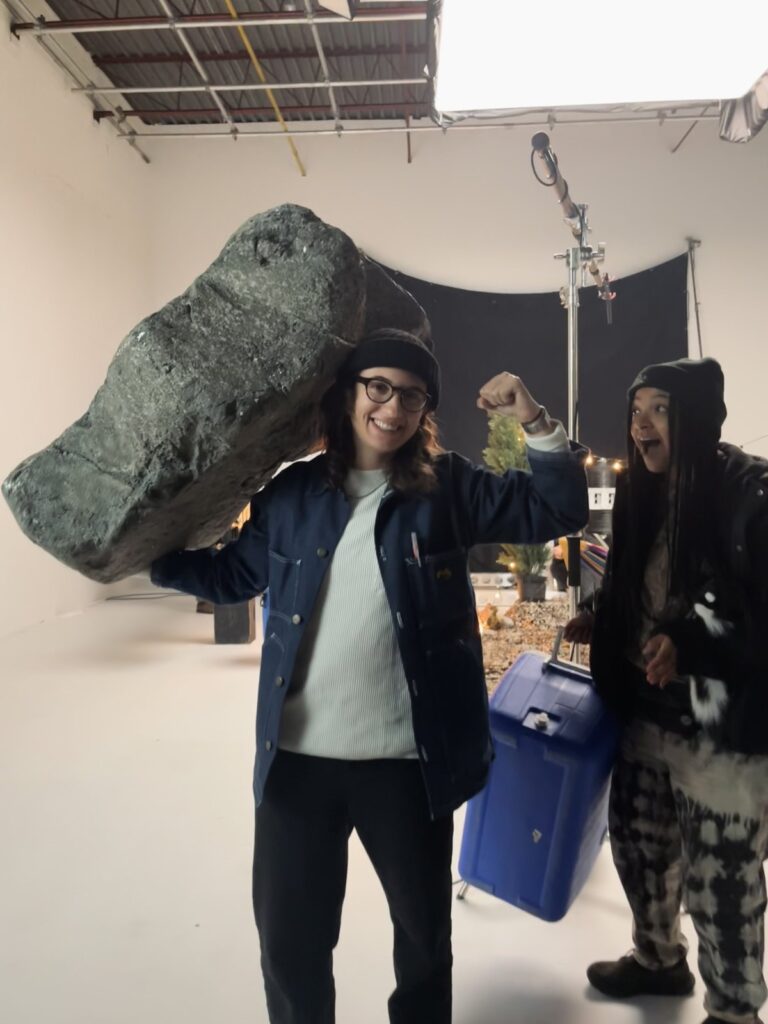
Tree wrangling, campsite edition. The rock is fake; the cooler is a genuine 1980s Coleman.
Post-Production
The edit is all rhythm. It meant finding the exact frame in each whip where one world becomes the next, then smoothing the hand-offs with speed ramps and a touch of motion blur until the whole thing cuts like a song. VFX erased every stand, cable and shadow that survived the set design, and stitched one wandering patch of grass back together frame by frame. Sound design gave each world its own miniature soundscape: waves and a distant “cowabunga” on the beach, crickets and authentic skunk squeaks at the campsite, and a perfectly timed “YOU DIED” for the gamer.
Colour stayed clean and punchy, with the campsite pushed cooler and moodier so the practicals glow warm. Here’s how the grade and cleanup came together:
The Result
Vivere started running the spot on Amazon the day they received it, and liked what the first numbers were telling them. And because every vignette was built to stand alone, the campaign shipped with stills and social cutdowns from each world. One 30-second concept, a full content package.
And the finished spot itself? Thirty seconds, six worlds, one move:
A move like this doesn’t belong to any one department. Rig, art, camera, edit, VFX, colour and sound all built one continuous swing together, and it’s one we’re proud of.
About the client
Vivere is a Canadian outdoor-living brand based in Guelph, Ontario, best known for its hammocks, sold through its own store and marketplaces like Amazon.
Arc Media is a video production company in Waterloo, Ontario. We create commercials, brand films and product videos for consumer and technology companies across Southwestern Ontario and beyond.
More from us: how we turned a hotel lobby into a surreal art gallery for Shopify’s NFT explainer.
Start something
Tell us what you’re making.
A product to launch, an image to build, a story to tell. Send a few lines and we’ll email back within a business day.